Blog
December 20, 2025•13 min read 

Procrastination Isn't Laziness

Aryan Techie
Procrastination Isn't Laziness
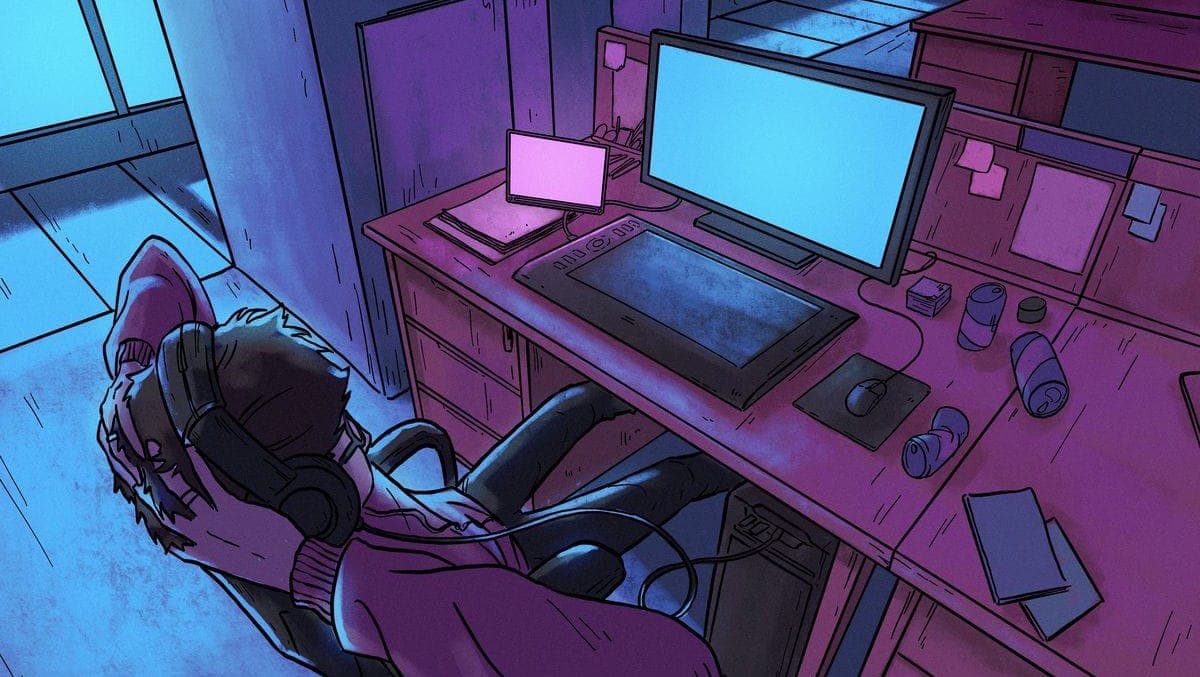
Every night before a serious work session, I perform the same ritual. I take my phone, turn on airplane mode, enable Do Not Disturb, and literally throw it onto my bed. Then I sit at my desk with nothing but my work. After a few minutes of discomfort, something magical happens: I hit flow state. Pure, focused, deep work. The kind where hours pass like minutes and you forget to eat. But here's the thing - I know this works. I've done it hundreds of times. Yet most nights, I still delay doing it. I scroll Instagram "just for a minute." I check Discord "real quick." I convince myself I need to "get in the mood first."
“I'm not procrastinating because I don't know what to do. I'm procrastinating because some part of me doesn't want to face what happens when I actually try.”
In 1830, Victor Hugo was catastrophically behind deadline on The Hunchback of Notre-Dame. His publisher had given him only a few months left, but Hugo was a spectacular procrastinator - entertaining visitors, wandering Paris, finding endless excuses not to write. Desperately, he invented a bizarre discipline system. He gathered all his normal clothes, gave them to his servant, and ordered them locked away. He kept only a massive wool shawl that draped around him like a monk's robe. Too embarrassed to leave his house dressed like a hermit, he found himself trapped indoors. He also bought a huge bottle of ink - a literal symbol of his commitment that would go down over time. Each morning, he sat half-naked at his desk, the cold air biting, with nothing to do but face the manuscript. His study became a prison. According to legend, Hugo would draft furiously and slide finished pages under the door where his servant collected them. Food and fresh paper were passed back. The routine never broke. By January 15th, 1831, the manuscript was complete. A feverish burst that birthed one of the great novels of the century. The lesson?
“You'll be amazed at what you can complete when you have no other option.”
The modern world is the antithesis of this. We have infinite escape routes - parties to attend, virtual meetings to observe, apps to scroll, videos to watch. We've built a civilization designed to help us avoid the hard thing. My phone-airplane-mode ritual? That's my wool shawl. My attempt to recreate Hugo's prison in a world engineered for distraction. When I was building Monkeybar recently, I went all in. Not "worked on it a lot" - I mean obsessed. Every spare moment, every thought, every ounce of creative energy got funneled into that single project. And it felt f💀cking amazing. That's what people don't understand about focus. When you commit fully to one thing, you build what AI people call a "context window" - the bigger it is, the more information you can pull in, the more connections you can make. I don't believe in multitasking because we're not supercomputers. People think they can handle parallel processing, but that's just rapid task-switching. Every switch has a cost - momentum lost, context destroyed, depth sacrificed. You can't multitask. Not in the macro, not in the way that matters. I watched this happen with my YouTube videos too. When I was making that video about music addiction, I wasn't also building apps, writing blogs, and doing ten other projects. I was consumed by that one thing. The context window got so big that insights started appearing I didn't know I had. You'll make more progress in 6 months of dedicated work than in 2 years of half-in, half-out effort. Not twice as much progress - exponentially more. Because you're not just working more hours, you're thinking with a bigger context window.
“Find something you can get obsessed about. Let it climb inside you and wear you like a parasite.”
Then, once you're done with that thing, move to the next obsession. That's how you actually build things that matter. Here's what I've realized: procrastination isn't a time management problem. It's a self-protection strategy wearing a productivity mask. We like to pretend we're just bad at scheduling or easily distracted. But that's bullshit. The real issue is deeper. Procrastination is about fear.
“When we delay doing the thing we know we should do, we're not wrestling with our calendar. We're wrestling with our self-worth.”
And the logic goes like this: If I try and fail, everyone will see. But if I never try at all, the failure stays private. Safe. Deniable. This is the psychological sleight of hand at the heart of procrastination. It looks like avoidance, but it functions like armor. You convince yourself:
  • The task is too big
  • The conditions aren't perfect
  • You need to feel ready first
  • You'll start tomorrow when you have more energy
But really? You're just terrified that doing your best might not be good enough. So you don't do anything. On the surface, procrastination looks like laziness. Underneath, it's fear wearing pajamas. Here's how elegant the trap is:
  1. You procrastinate because you don't want to look bad
  2. This fear stops you from doing the thing
  3. You're afraid of failure
  4. But by procrastinating, you guarantee failure
You inoculate yourself from public failure by certifying your failure privately. The safety blanket is this: "Well, I could have done it if I'd actually tried." As long as you don't fully commit, you can still tell yourself you could have been great. You preserve the possibility of your own potential by never testing it. It's an emotional insurance policy. A psychological loophole that lets you stay intact while your dreams slowly starve. And weirdly, it's one of the few behaviors where we congratulate ourselves for executing a strategy that delivers the opposite of what we want.
“You choose the fake safety of hypothetical excellence over the real, messy business of actually trying.”
You choose the version of you who "could have done great things" over the version who actually might. I need to be honest here because otherwise this is just another procrastination article full of theory. I'm procrastinating on fully committing and putting my work out consistently. Not because I'm lazy. Not because I don't have time. Not because I don't know what to do. Because I'm afraid that if I really try, I'll find out I'm not as good, deep, or special as I believe. As long as I don't fully try, I can still tell myself I could have been. I can maintain the story: "If I actually went all in, I'd be successful." But what if I go all in and it turns out I'm just... okay? Average? Not special at all? That terrifies me more than never trying. And I know I'm not alone in this. Every person who "doesn't have time" to write that book, start that business, create that thing - they're protecting the same story. The story where they're potentially great, rather than provably ordinary. Once you see procrastination clearly, the whole game changes. The question stops being "Why can't I get started?" and becomes:
“What am I so afraid will be true about me if I actually try?”
That's a much harder question. Which is why most people never ask it. They just carry on congratulating themselves for their caution while quietly guaranteeing the outcome they fear most. Beyond the fear, there are usually two practical reasons for procrastination: 1. You don't know what to do Solution: What's the next physical action? Don't think "I need to write a book." That's overwhelming. Think: "I need to throw the covers off. Put one leg out of bed. Stand up. Go to my desk. Open my laptop. Write one sentence." Most people can do one more step. They just can't run a marathon in a single go. 2. You know what to do but don't know how Solution: Ask someone. Google it. Ask ChatGPT. Watch a YouTube tutorial. Call a friend who's done it before. With the internet, this isn't really an obstacle anymore. It's an excuse disguised as a problem. But the real block - the one that stops you before you even get to these practical issues - is the identity problem. The fear of being seen. The protection of your self-image. The antidote to procrastination isn't motivation. Motivation comes and goes like weather. The antidote is surrender. You lower the stakes. You let yourself look foolish. You accept:
  • The embarrassment of being a beginner
  • The awkwardness of doing something badly
  • The exposure of your real effort being put on the line
Because once you remove the need to look good, the need to start becomes easy. A time I chose to look foolish was when I started sharing my work publicly instead of waiting to be "ready." I knew it wouldn't be perfect. I knew people might ignore it or judge it. I did it anyway. It felt uncomfortable and exposing at first - like stepping out without armor. But almost immediately, it also felt light. Because I wasn't performing anymore. Just learning.
“Choosing to be a beginner felt freeing. Protecting my image always felt heavy.”
I used to tell myself I was "still refining" or "waiting for the right time." But really, I was guaranteeing private failure so I wouldn't have to face public rejection. The hardest part of any meaningful work isn't the work itself. It's the identity shift from someone who protects their image to someone who risks it. Here's something that might help: Do you know what people thought about all the things you didn't try? Nothing. They didn't think anything about you because you didn't try. The very thing you're worried about - becoming irrelevant, people not caring - happens when you don't try. And here's what I've learned: somebody who tries, regardless of whether they succeed or fail, is worthy of way more respect than someone with that sardonic, distanced, non-earnest "I didn't really try, man" energy. I'd much rather hang around people willing to look foolish while trying than people who protect their coolness by never risking anything. As you get older, you realize failure isn't that big of a deal. What's scary is waking up at 40 and realizing you spent two decades protecting your image instead of building your life. That part of you that needs protecting? The one terrified of looking silly, being judged, having your self-worth damaged by failure? It doesn't need as much protection as you think. It's a juvenile version of you. Immature. It's the part that prioritizes looking good over being real. And if you don't turn around and deal with it - if you don't pick it up and bring it along - it will follow you forever. Every time you try to take a step forward, you'll step on it, and it'll yelp: "Oh no, what if we mess up?" That's no way to live. Back to my phone-airplane-mode ritual. It works because I've eliminated the easy escape routes. When my phone is on my bed in airplane mode and I'm sitting at my desk, the friction to distract myself is higher than the friction to just work. I've created my own version of Hugo's wool shawl. Not perfect, but enough. But even this isn't really about the phone. It's about proving to myself that I can sit with discomfort without reaching for an escape. Because that's what procrastination is - reaching for escape before you even feel the thing you're avoiding. You don't need courage to begin. You just need the willingness to be seen beginning. Procrastination is a flimsy emotional habit built to protect a version of you that was never meant to survive adulthood. The question is: Do you want to be around people who have the willingness to be seen beginning? Or people who would rather look cool by never risking public failure at something they might win at? Find your tribe. Because the energy you choose to surround yourself with will determine whether you ever start. Here's what I'm committing to: I'm going to stop protecting the story of what I could be and start testing what I actually am. I'm going to write that sentence I've been avoiding. Build that thing I've been "planning." Ship that work before it feels ready. Not because I suddenly became brave. But because I'm tired of living in theory rather than practice.
“Procrastination is often not about indecision. It's a decision to live in theory rather than in practice.”
And I'm done with that. Sit down right now and ask yourself: What am I procrastinating on that's actually about fear? Not what you're "too busy" to do. What you're actually afraid to try. Then ask: What am I afraid will be true about me if I actually try this? Write down the answer. Look at it. Really look at it. That fear you're protecting? It's keeping you safe and small. It's guaranteeing the very failure you're trying to avoid. The next step isn't to suddenly become motivated. The next step is to lower the stakes. What's the smallest, most embarrassing, most beginner version of the thing you want to do? Do that. Today. Not the perfect version. Not the impressive version. The version where you're willing to be seen beginning. Because once you do it once - once you prove to yourself that trying and looking foolish doesn't kill you - the dragon becomes a lot smaller. And procrastination stops being this massive, insurmountable thing. It becomes what it always was: A flimsy habit protecting a version of you that never needed protecting in the first place.
I'm writing this at 2 AM because I kept procrastinating on writing about procrastination. The irony isn't lost on me. But I finally just opened the document and wrote one bad sentence. Then another. Then this. What's your one bad sentence? The thing you've been avoiding that you could do right now, badly, without permission? Stop reading. Go do that. I'll still be here when you get back. But you won't be the same person who left. Peace.
Share this post:

Subscribe to Aryan’s Newsletter

On The Insight Journal, I share ideas at the intersection of code, clarity, creativity, and systems.